Tech Support for LoRaWAN Gateway (Outdoor)
Expert troubleshooting, integration assistance, and dedicated support options.
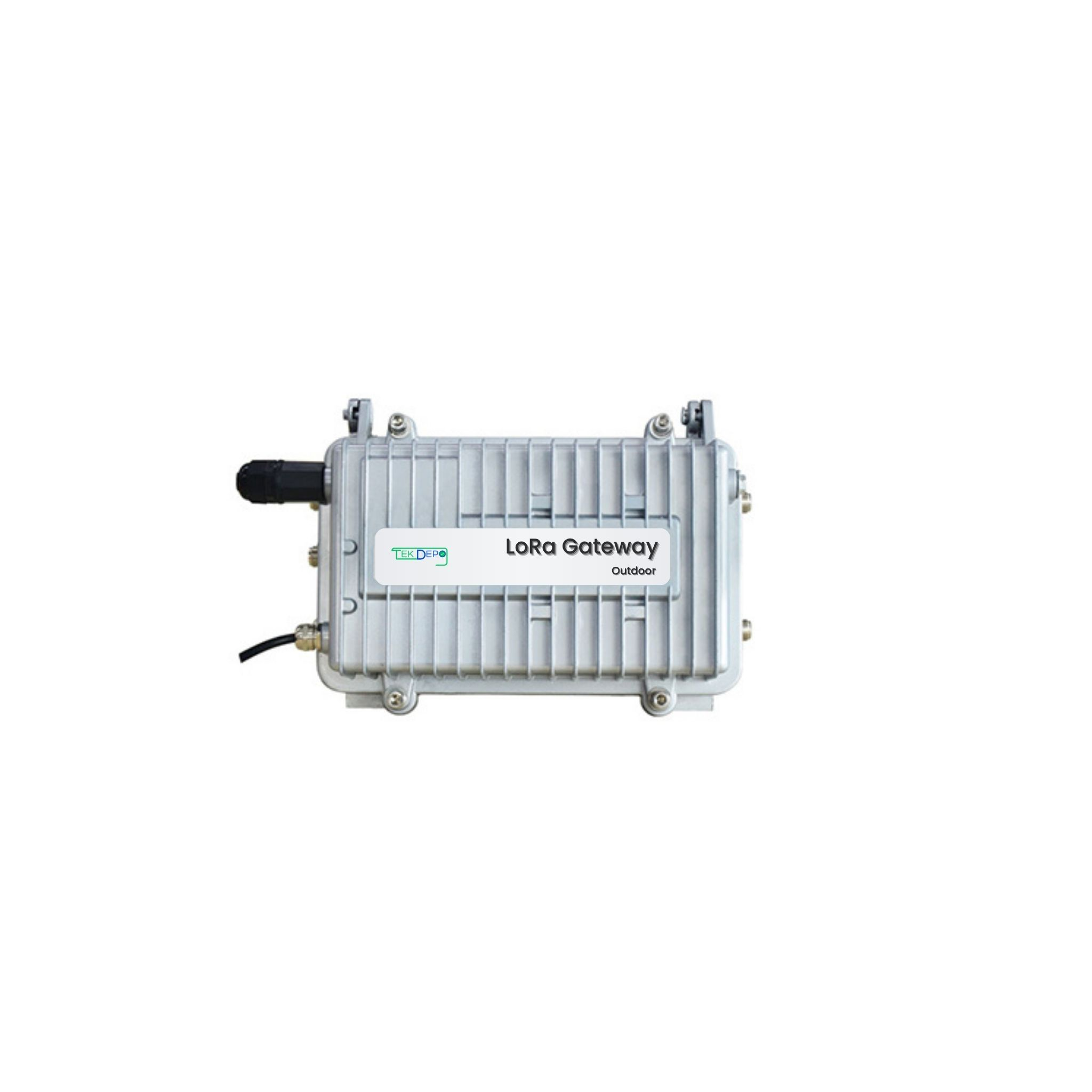
Downloads & Guides
Access the latest firmware, manuals, and software tools.
Integration Support
Need assistance configuring protocols or connecting to SCADA?
Book Remote SessionTechnical Specifications
| LoRaWAN Communication | Network Topology: Star topology | LoRa Protocols: LoRaWAN, LinkWAN | Device Classes: Class A, Class B, Class C | Operating Frequencies: EU433, CN470-510, EU863-870, US902-928, AU915-928, AS923, KR920-923 | Upstream Channels: 8 | Downstream Channels: 1 | Communication Bandwidth: 125 kHz / 250 kHz / 500 kHz | Max TX Power: 23 ±2 dBm | Receiver Sensitivity: -142 dBm @ LoRa | Outdoor Communication Distance: Up to 9 km (line-of-sight) | Urban Communication Distance: Up to 6 km |
|---|---|---|---|---|---|---|---|---|---|---|---|
| Backhaul & Connectivity | Uplink Methods: 3G, 4G, Wired Ethernet | Ethernet Ports: 1 × WAN, 4 × LAN (10/100 Mbps) | Wi-Fi: IEEE 802.11 b/g/n | SIM Interface: Standard SIM/UIM slot with ESD protection | |||||||
| System & Performance | CPU: Industrial-grade 32-bit processor | Wireless Module: Industrial-grade multi-channel LoRa RF module | Local Storage: 32 GB TF card | Location Services: GPS, BeiDou (optional) | Data Rate Control: Adaptive Data Rate (ADR) | System Reliability: Watchdog timer, anti-drop online protection | |||||
| Antenna Interfaces | LoRa Antenna: N-type female, fiberglass, 2 dBi | Cellular Antenna: N-type female, fiberglass, 3 dBi | Wi-Fi Antenna: N-type female, 2.4 GHz, 3 dBi | GPS Antenna: N-type female, 4 dBi | |||||||
| Power & Consumption | Power Supply Options: AC 220V, PoE, Solar (optional) | PoE Standard: IEEE 802.3af / IEEE 802.3at | Standby Consumption: ≤140 mA @ 12V | Transmit Current: ≤550 mA @ 12V | Receive Current: ≤420 mA @ 12V | ||||||
| Mechanical & Environmental | Enclosure Material: Aluminum alloy | Ingress Protection: IP65 | Dimensions: 289.4 × 217.5 × 115 mm | Weight: Approx. 2700 g | Installation: Wall-mount or pole-mount | Operating Temperature: -40°C to +85°C | Storage Temperature: -40°C to +125°C | Operating Humidity: 95% non-condensing | |||
| Certifications & Compliance | Certifications: CE, FCC |
Frequently Asked Questions
Find answers to common questions about our products
What is the primary use of the LoRaWAN Gateway (Outdoor)?
It is used to collect data from LoRaWAN sensors and devices and forward it to cloud platforms over cellular or Ethernet networks for large-scale outdoor IoT deployments.
What communication range can this outdoor LoRaWAN gateway achieve?
It supports up to 9 km line-of-sight outdoor communication and up to 6 km in dense urban environments.
Which LoRaWAN device classes are supported?
The gateway supports LoRaWAN Class A, Class B, and Class C end devices.
How is the gateway powered in outdoor installations?
It can be powered using AC 220V, PoE (IEEE 802.3af/at), or optional solar power for remote outdoor locations.
Is the gateway suitable for harsh outdoor environments?
Yes, it features an IP65-rated aluminum enclosure, wide temperature tolerance, and industrial-grade components for continuous outdoor operation.
What installation methods are supported?
The gateway supports wall mounting and pole mounting using the provided installation accessories.
Can the gateway store data locally if the network goes down?
Yes, it includes a 32 GB TF card for local data buffering and storage during network interruptions.
Does it support GPS-based location tracking?
Yes, GPS and BeiDou location services are supported as optional features.
Which industries typically use this gateway?
It is commonly used in smart cities, utilities, industrial IoT, smart transportation, agriculture, environmental monitoring, and large campus deployments.
Still have questions?
Contact Our TeamNeed specialized help?
If the guides above didn't resolve your issue, our engineering team is here to assist with complex integrations.